


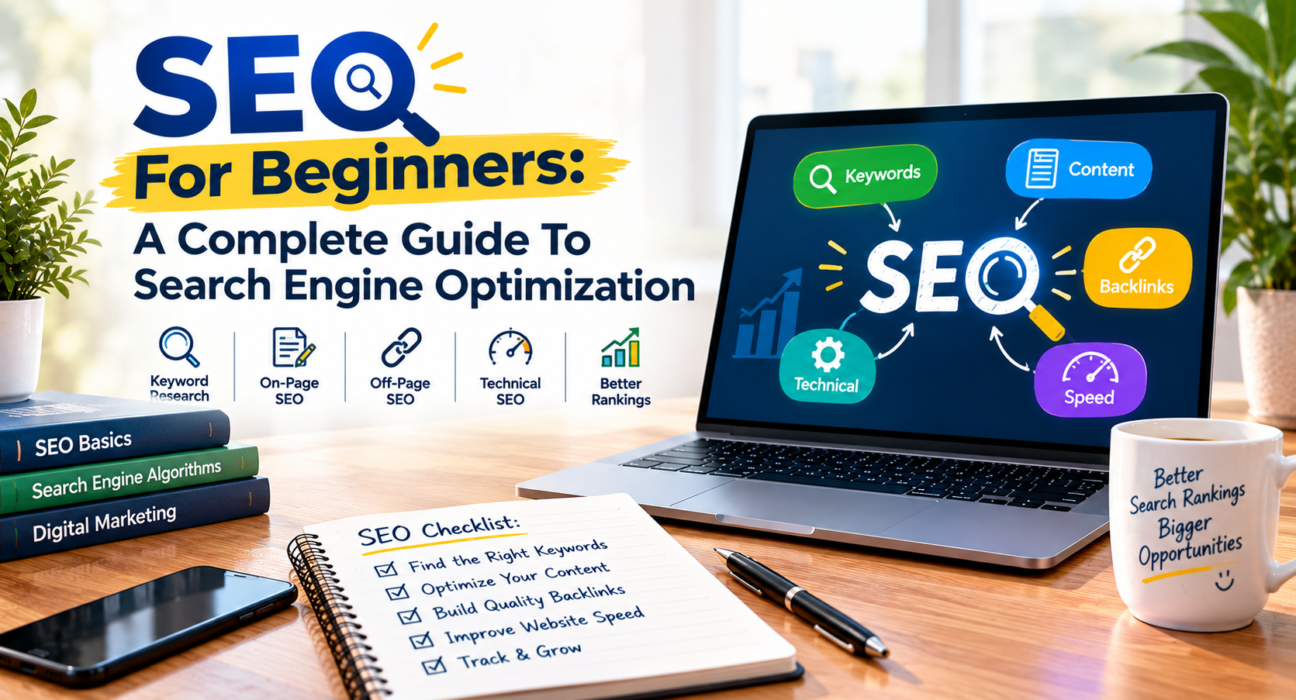
Search engine optimization, or SEO, helps search engines understand website content and helps people discover relevant pages through organic search results.
SEO For Beginners can seem complicated because it includes content, technical website health, keywords, internal links, and website reputation. The good news is that you can learn the fundamentals step by step.
1. Understand Search Intent:
Before writing an article, consider what the searcher wants to accomplish.
Someone searching for a definition may want a simple explanation. Someone comparing products may need detailed features, advantages, limitations, and pricing information.
Your page should match the likely intent behind the query. Creating content that answers a different question can make it difficult for readers to find what they need.
2. Conduct Keyword Research:
Keyword research helps identify the words and questions people use when searching online.
Start by listing topics relevant to your website. Explore related searches, customer questions, and keyword research tools to discover useful opportunities.
Choose a primary keyword for each page and include relevant related terms naturally where they help explain the topic.
Do not force the same phrase into every paragraph. Clear, helpful writing is more important than repetitive keyword use.
3. Optimize Page Titles and Headings:
A page title should describe the content accurately and distinguish it from other pages on your website.
Use a clear main heading and organize longer articles with meaningful subheadings. These help readers scan the page and understand its structure.
Meta descriptions should summarize the page and give users a useful reason to visit. Search engines may generate their own snippets depending on the query, so a written description is not guaranteed to appear exactly as provided.
4. Create Helpful Content:
Good SEO begins with useful content. Explain topics clearly, answer important questions, and include examples where they improve understanding.
Avoid copying other websites or publishing thin pages that add little value. Check factual claims and keep important information updated.
If you use AI tools to assist with content, review the output carefully and add original expertise. Learn more in our guide to AI tools for productivity.
5. Improve Technical SEO:
Technical SEO helps search engines access and understand your website.
Important areas include crawlability, indexing, internal links, mobile usability, secure connections, and website performance.
Use descriptive URLs and avoid creating unnecessary duplicate pages. Check that important pages can be reached through sensible navigation and internal links.
A technically accessible website does not automatically rank well, but technical problems can prevent useful content from performing as intended.
6. Use Internal Linking:
Internal links connect one page of your website to another. They help visitors discover related information and help search engines understand relationships between pages.
For example, an article about digital marketing can link to a detailed SEO guide using descriptive anchor text such as digital marketing strategies.
Place links where they genuinely help readers. Avoid adding irrelevant links or repeating the same anchor text unnaturally across every page.
7. Earn Relevant Backlinks:
Backlinks are links from other websites to your pages. Relevant editorial links can help people discover your content and may contribute to how search engines assess your site’s reputation.
Focus on creating useful resources, publishing original insights, developing genuine industry relationships, and earning legitimate mentions.
Avoid buying links intended to manipulate rankings or participating in link schemes. Such tactics can create SEO risks.
8. Measure SEO Performance:
Tools such as Google Search Console can help website owners understand search visibility, queries, clicks, and indexing issues. Analytics tools may provide additional information about visitor behavior when properly configured.
Review performance over time instead of judging a strategy by a single day or week. Results depend on competition, content quality, technical factors, and many other variables.
Conclusion:
SEO is a long-term process that combines understanding search intent, researching keywords, creating helpful content, maintaining a technically sound website, and building relevant internal links.
Start with your most important pages, measure performance, and improve them consistently. Focus on helping visitors find accurate answers rather than chasing quick ranking promises.