





Where Online Business Is Headed: AI, SEO, Social Media And Code Working As One:
A website and a social media page used to be enough to call yourself “online.” That’s no longer true. Customers now compare you with a dozen competitors in minutes, and the businesses that win are the ones that understand their audience, share something genuinely useful, and use modern tools without being run by them.
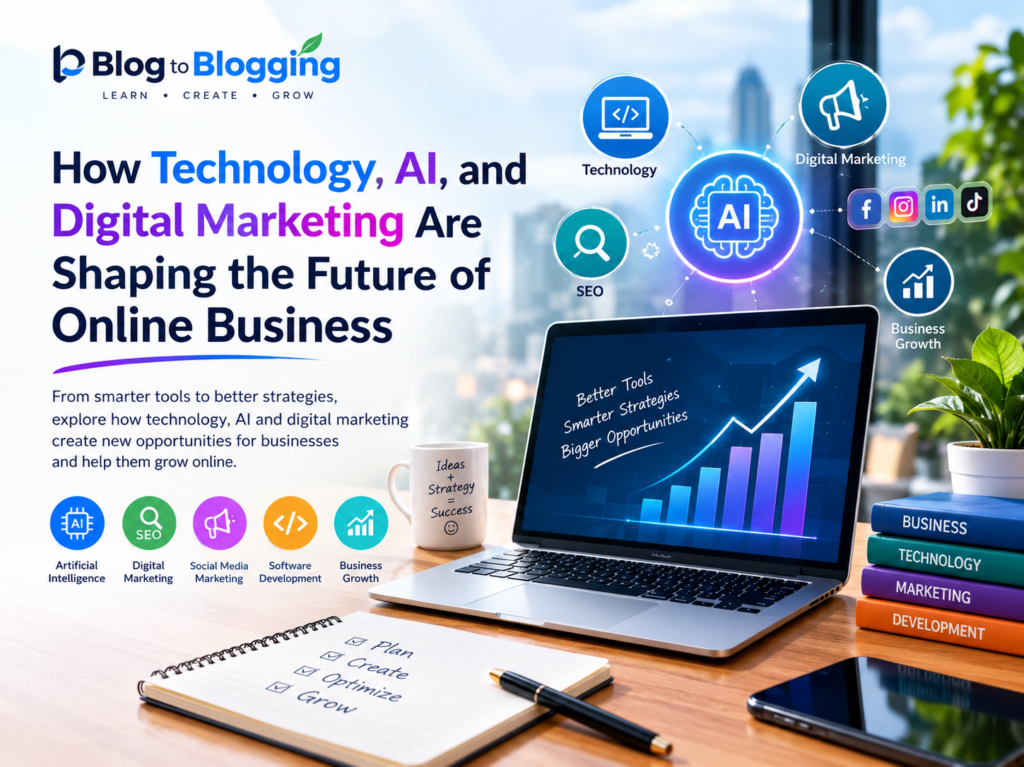
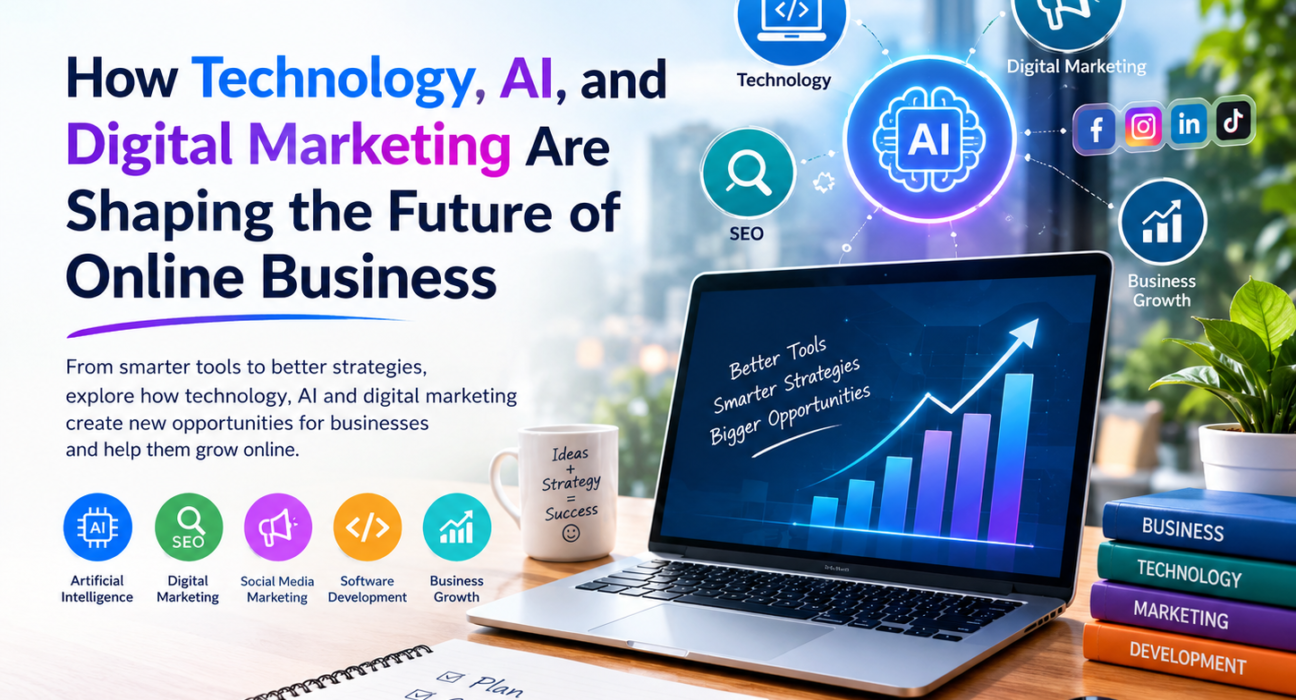
This post looks at how AI, digital marketing, SEO and software development fit together, and where a beginner can realistically start.
Why Going Digital Changes The Game?
An online business is simply any business that finds customers and serves them through the internet: a Shopify store, a blog, a SaaS tool, an online academy, a marketing agency.
The biggest shift is reach. A shop in one neighbourhood can only serve that neighbourhood, but a well-built website can bring in buyers from another city or even another country. You also get data you never had before: which pages people read, where they drop off, which products sell, what customers complain about.
None of this guarantees success, though. A slow site, poor support or weak security will undo the best marketing. And if you aren’t solving a real problem for real people, traffic won’t save you.
AI: a Fast Assistant, Not a Decision-Maker:
AI tools can speed up research, outline articles, summarise data, answer routine customer questions and handle repetitive chores. A shop owner might use one to brainstorm campaign ideas on a Monday morning; a developer might ask it to explain an unfamiliar block of code.
The catch is that AI confidently gets things wrong. It misses context, repeats generic advice and sometimes invents facts. Anything involving prices, laws, health or technical accuracy needs to be checked against a trustworthy source.
The practical rule is simple: let AI do the first draft of the thinking, and let a human do the judging, editing and fact-checking.
Digital Marketing: Being Found And Being Understood:
A great product nobody has heard of earns nothing. Digital marketing closes that gap through search engines, social platforms, email and paid ads.
Before picking channels, work out who you’re talking to. What do they struggle with? What do they type into Google? Where do they spend time? Once you know, choose a few channels that fit your budget and goals rather than spreading yourself thin across all of them.
Roughly speaking, search brings people who are already looking, social media builds familiarity and community, and email keeps in touch with people who’ve said they want to hear from you.
SEO: Slow,Steady And Worth it:
SEO is the work of making your site easy for search engines to understand and useful for the people who land on it. The main pieces are:
- Keyword research: learning the exact phrases and questions your audience uses.
- On-page SEO: clear titles and headings, readable URLs, sensible internal links and content that actually answers the search.
- Technical SEO: making sure pages can be crawled and indexed, load quickly and work well on phones.
- Content quality: accurate, original writing that earns trust.
- Off-page SEO: earning mentions and backlinks naturally through good resources and real relationships, not link schemes.
Be wary of anyone promising a guaranteed #1 ranking. Results depend on competition, site quality and time. The dependable approach is to publish for people first, track what happens, and keep improving.
Social Media: More Than Posting Daily:
Posting every day without a purpose gets little in return. Good social media has a reason behind each post and speaks to a specific audience.
A software company might share short tutorials. A consultant might post practical tips on LinkedIn. An online store might film quick product demos and answer common questions on camera.
A mix of educational posts, how-tos, industry news, customer Q&As and behind-the-scenes moments works well for most brands. Then look at what people actually respond to, such as engagement, clicks and enquiries, and do more of that. Keep your branding consistent and reply to comments politely and promptly.
Software And Website Performance:
Behind every smooth online experience is software, whether it’s a simple brochure site, a mobile app or a full e-commerce platform. For most businesses, the website is where customers decide to buy or walk away.
A good site is easy to navigate, looks right on every screen size, loads fast and handles forms and personal data safely. Broken links and faulty checkout forms quietly cost you sales.
On the technology side, you might choose WordPress, a site builder or custom development. The right pick depends on your budget, features and long-term plans, and a simple business site rarely needs a heavy custom build. Whatever you choose, schedule regular updates, backups and security checks.
Making it All Work Together:
These skills are strongest when they pull in the same direction. Imagine launching a new store: developers build it, SEO shapes the page structure so people can find it, marketing explains why it’s worth buying from, and social media starts conversations. AI helps with research and routine tasks, and analytics tells you what to fix next.
When they work in isolation, things fall apart. Traffic lands on a confusing page and leaves. A viral post sends people to a site that doesn’t explain the offer. A coordinated approach links visibility, user experience and trust to results you can measure.
Where Beginners Can Start?
You don’t need to learn everything at once. Try this path:
- Pick one direction, such as blogging, SEO, marketing, AI tools or development.
- Learn the basics from official documentation and reputable courses.
- Build something real: a small site, a few helpful articles, a mini app or a test campaign.
- Practise regularly. Small projects show you what you don’t know yet.
- Track your progress with simple numbers like projects finished, visits or enquiries.
- Keep up with changes, because tools and platforms evolve constantly.
- Aim to be useful. Whatever you make, make it solve someone’s actual problem.
Progress is usually gradual, so don’t expect overnight results from any single tactic.
Final Thoughts:
Technology, AI, SEO, social media and software will keep reshaping online business. The people who benefit most are those who stay curious, keep learning and focus on solving real problems.
Tools alone won’t carry you. You also need a good product or service, accurate information, a plan and a user experience people enjoy. Choose the skill that fits your goals, put it into practice and build from there.
At BlogToBlogging, we share practical, easy-to-follow insights on business, technology, AI, digital marketing and software development. Keep learning and take your next step.